

Yunnan: A Favored Land
On China's southwestern frontier lies a favored land — Yunnan. "South of the Clouds" is more than a name: it is the ancestral home of 26 ethnic groups, a realm where snow mountains and tropical rainforest coexist.
From 6,740 m Meili Snow Mountain to the 76 m Hekou valley, Yunnan compresses seven climate zones from frigid to tropical into 394,000 km². The southernmost snow ranges of the Northern Hemisphere, Asia's deepest gorges, the world's most spectacular terraces, China's only tropical rainforest — all within one province.
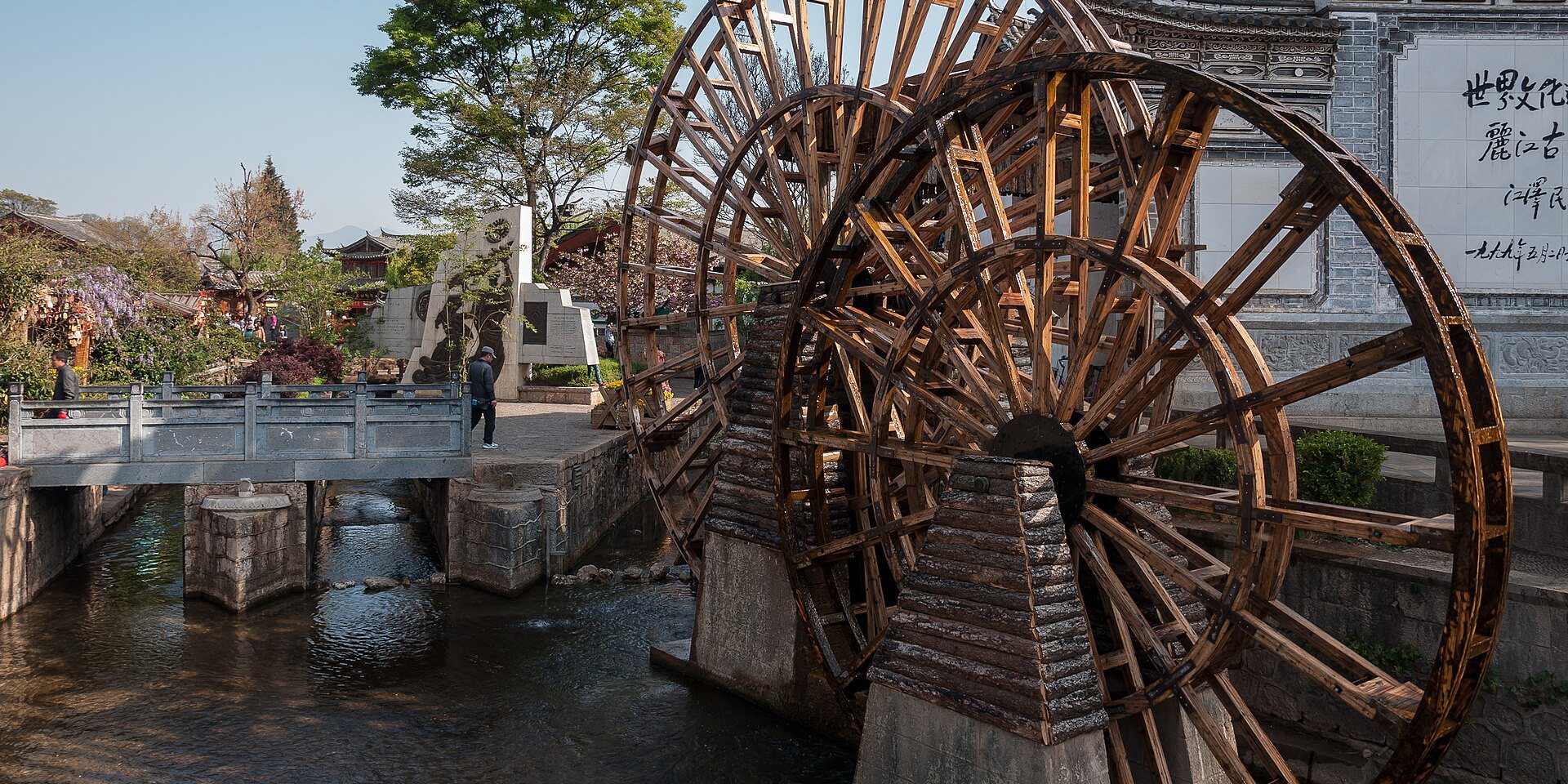
In Dali, cycle the 120 km ecological corridor around Erhai as Cangshan snow mirrors the lake's moon; in Lijiang, follow 800-year-old bluestone lanes into Naxi Dongba culture and linger over folk songs in an old-town bar; in Shangri-La, prayer wheels turn through the scent of butter tea — and Meili's golden summit at dawn will convince you that some scenery is worth crossing mountains and seas for.
The flavors are just as unforgettable: a scalding bowl of crossing-the-bridge noodles carries Yunnan cuisine's gentle depth; a pot of wild-mushroom hotpot is the rainy-season forest's most generous gift; a crisp flower cake seals highland roses into flaky pastry (see signature food below).
People here live unhurried and smile honestly. The Dai Water-Splashing Festival, the Yi Torch Festival, the Bai March Fair… In Yunnan you are not a passerby — you are coming home. There is a way of life called Yunnan. South of the Clouds — waiting for the wind, waiting for you.
Top 10 Must-See Attractions
Lijiang Old Town and Erhai Lake come with promo videos (click for fullscreen playback); videos for the other sites are on their way.
| Attraction | Highlights | Location | Best months | Video |
|---|---|---|---|---|
| Lijiang Old Town丽江古城 | UNESCO World Heritage and an 800-year hub of the Tea-Horse Road. The wall-less old town centers on Sifang Street — bluestone lanes winding, bridges and streams threading the alleys. By night the lanterns glow and folk songs drift: Naxi culture and slow life at their finest. | Gucheng, Lijiang | Mar–May Sep–Nov | |
| Erhai Lake大理洱海 | One of the four scenes of "wind, flowers, snow, moon" and China's 7th-largest freshwater lake. The 120 km lakeside ecological corridor is a cycling dream: Panxi S-bend, the lone tree by the bridge pier, rice fields west of the lake; feed the gulls in winter, watch lotus in summer. | Dali City | Mar–May Sep–Dec | |
| Meili Snow Mountain梅里雪山 | Foremost of the eight sacred peaks of the Tibetan world; its main summit Kawagarbo (6,740 m) has never been climbed. Wait at Feilai Temple for the "golden summit at dawn" — the first light gilding the snow from silver to gold. Stay a night, gamble on two dawns: that's the rule. | Deqin, Diqing | Oct–May | — |
| Jade Dragon Snow Mt. & Blue Moon Valley玉龙雪山 · 蓝月谷 | The sacred mountain of the Naxi — a cable car climbs straight to the 4,680 m viewing deck. At its foot, Blue Moon Valley gathers glacial meltwater into jelly-clear, Tiffany-blue pools mirroring the snow peaks: wallpaper-grade views, no filter needed. | Yulong, Lijiang | Nov–Apr | — |
| Kunming Stone Forest昆明石林 | UNESCO natural heritage, the "First Wonder under Heaven". 270 million years ago this was ocean; as the sea retreated it left sword-like karst pillars 20–40 m high. The legend of Ashima grew up inside this stone forest. | Shilin, Kunming | Mar–May Sep–Nov | — |
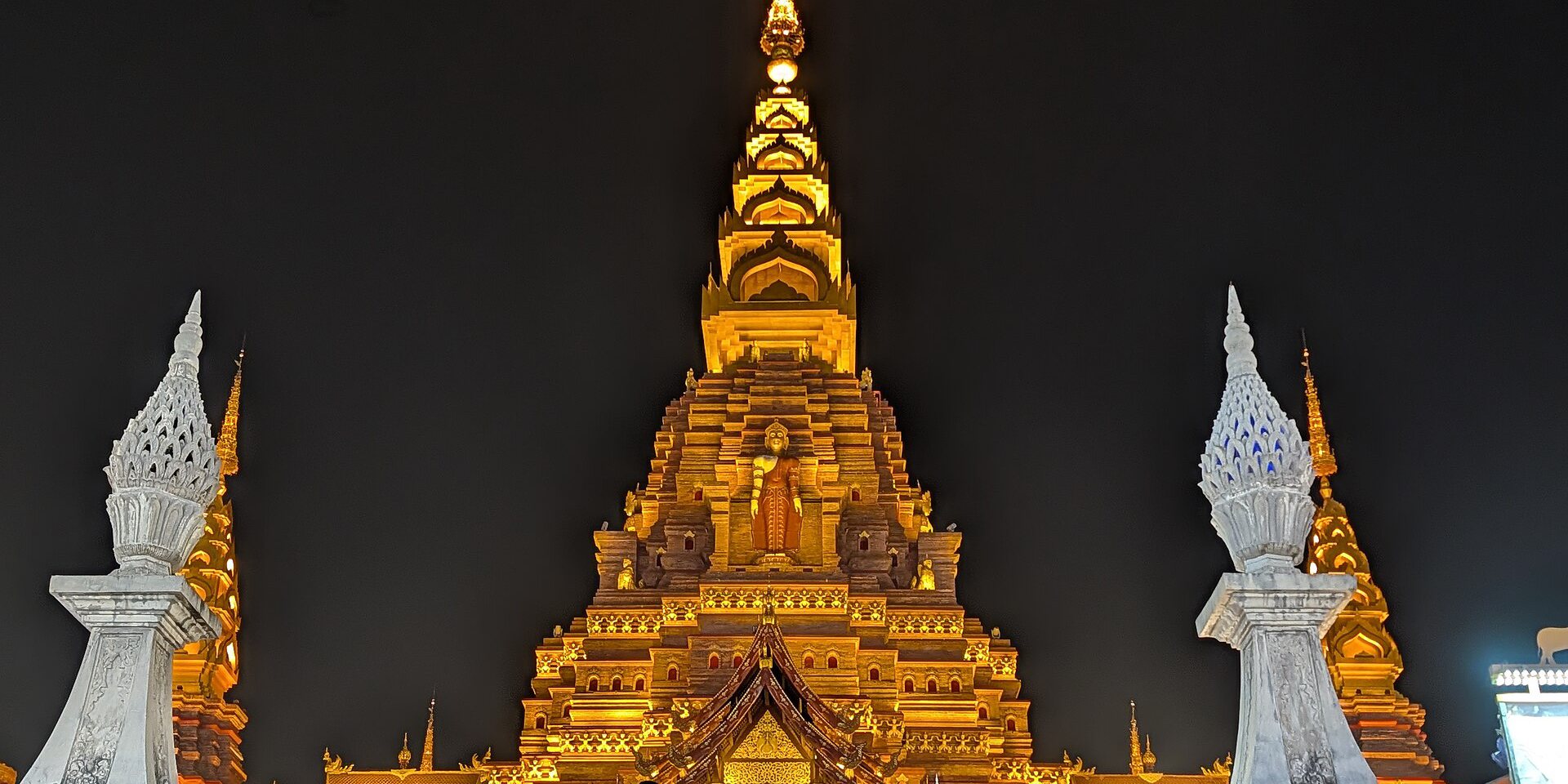
| Xishuangbanna西双版纳 | China's only tropical rainforest reserve, rich in Dai-Thai flair. Ten million lights of the Gaozhuang Starlight Night Market blaze from the foot of the Great Golden Stupa; the CAS Tropical Botanical Garden is a treasure house of species; in April the Water Festival turns into citywide revelry. | Jinghong, Banna | Nov–Apr | — |
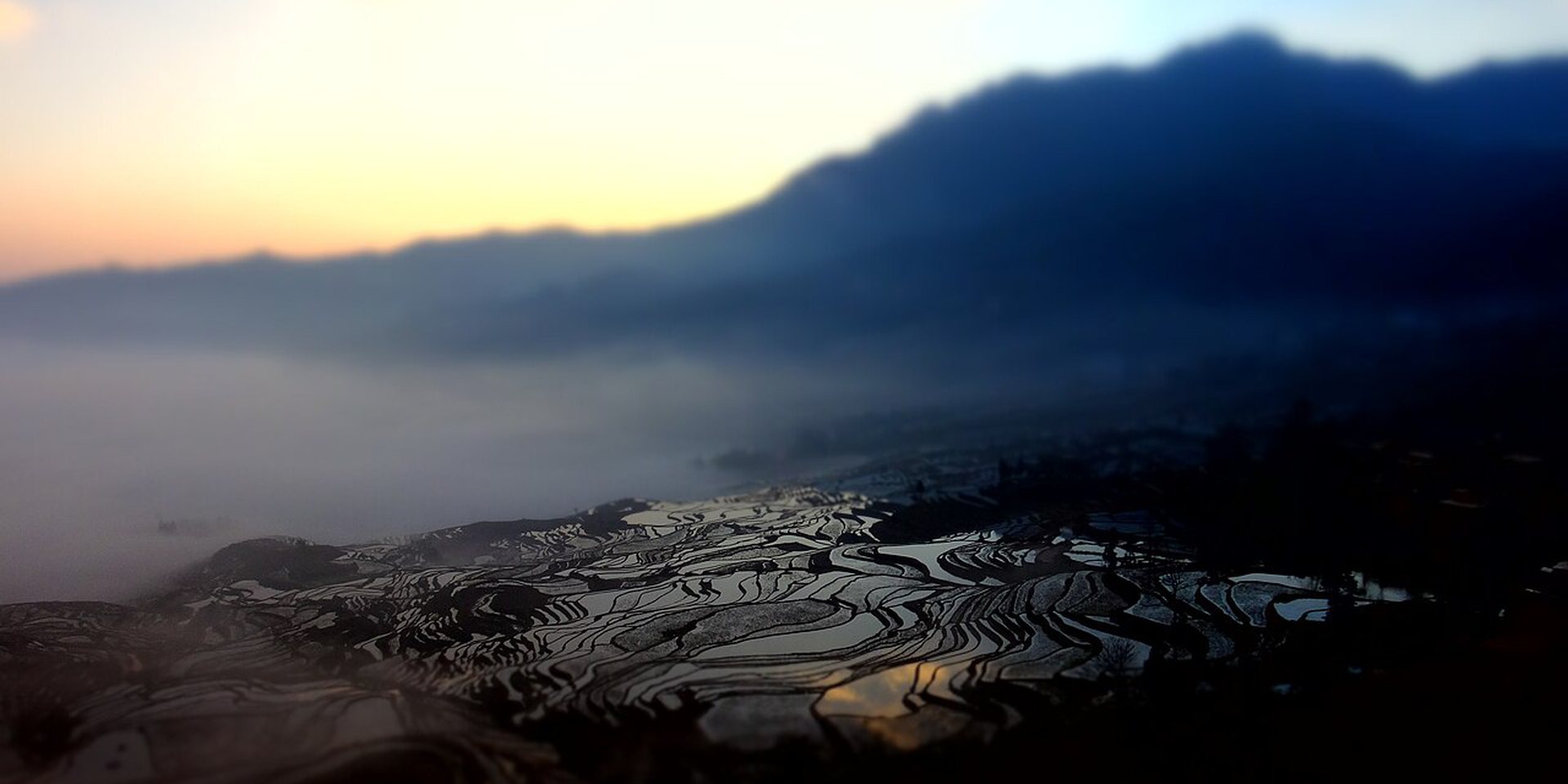
| Yuanyang Hani Terraces元阳哈尼梯田 | UNESCO World Heritage — earth sculpture cultivated by the Hani for 1,300 years. Forests on top, villages in the middle, terraces filling every valley; in the winter-spring flooding season they become mirrors of the sky (sunrise at Duoyishu, sunset at Bada), turning into a green palette in summer and autumn. | Yuanyang, Honghe | Nov–Mar | — |
| Tiger Leaping Gorge虎跳峡 | One of the world's deepest gorges: the Jinsha River squeezed between Jade Dragon and Haba snow mountains, just 30 m wide at its narrowest, the water thundering. Upper, Middle and Lower sections each hold their wonders; the trek is world-famous, most spectacular in the high-water months of Jul–Aug. | Shangri-La, Diqing | May–Oct | — |
| Pudacuo National Park普达措国家公园 | Mainland China's first national park — a plateau sanctuary at 3,500–4,150 m. Shudu Lake and Bita Lake are crystal clear, primeval forests block out the sky, meadows graze at ease, and commercialization is almost nil. | Shangri-La, Diqing | May–Oct | — |
| Jianshui Ancient Town建水古城 | A thousand-year town more authentic than Dali: Chaoyang Tower (28 years older than Tiananmen), the 17-arch Shuanglong Bridge, well-water tofu and intangible-heritage purple pottery. The century-old meter-gauge train trundles at 25 km/h through paddies and old villages — slow to the point of healing. | Jianshui, Honghe | Mar–May Sep–Nov | — |
Signature Food of Yunnan
Dian cuisine is a platter of mountains and peoples: the depth of mushrooms, the clarity of steam-pot chicken, the sweetness of flower cakes, the wild roast-and-cure of every ethnicity.
| Photo | Dish | About | Origin / Region | Tags |
|---|---|---|---|---|
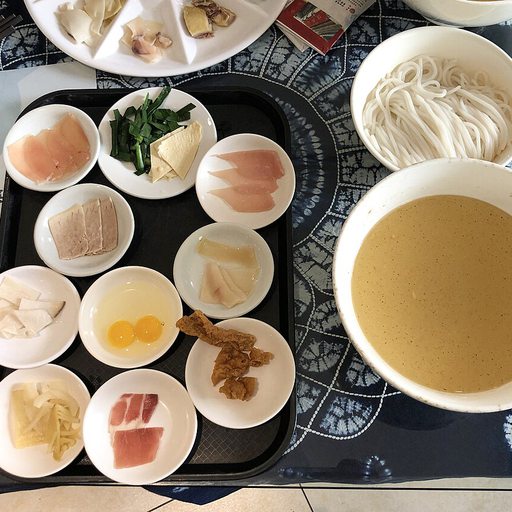 |
Crossing-the-Bridge Noodles过桥米线 | Yunnan's culinary calling card and national intangible cultural heritage. Scalding, golden chicken-oil broth locks in the heat; quail egg, raw meat slices, greens and rice noodles are blanched in sequence — a ritual in every bowl. Born in Mengzi during the late Qing, over a century ago. | Mengzi, Honghe | Intangible heritage Dian cuisine icon |
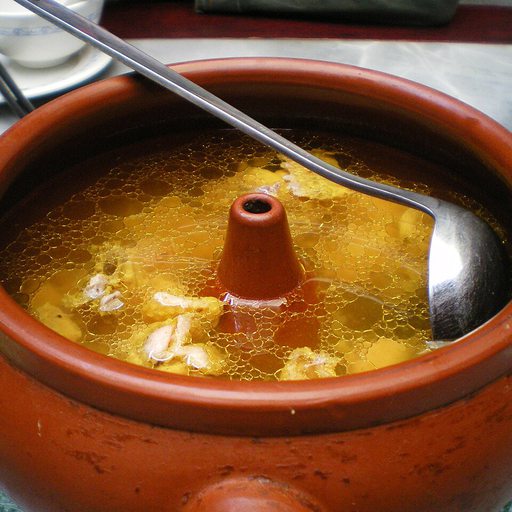 |
Steam-Pot Chicken汽锅鸡 | A classic Yunnan dish cooked in a Jianshui purple-pottery steam pot: not a drop of water added — the broth condenses from steam alone. Free-range chicken steamed slowly for three hours, meat falling off the bone, soup clear and sweet, sealing in the purest flavor. | Jianshui, Honghe | Top-10 Dian dish State-banquet grade |
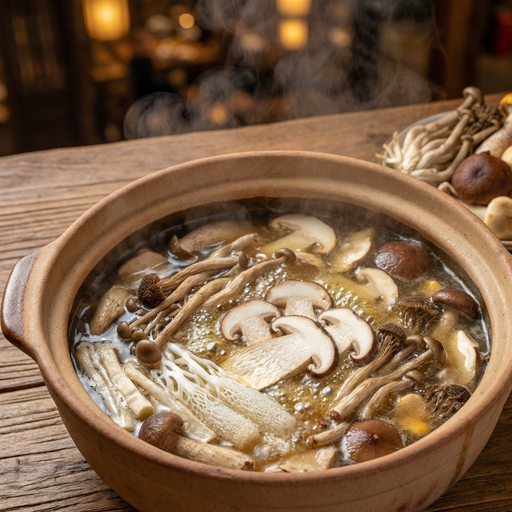 |
Wild Mushroom Hotpot野生菌火锅 | Yunnan is the "kingdom of mushrooms" — this is the rainy season's (Jun–Sep) limited delicacy. Termite mushrooms, matsutake, porcini and bamboo fungus simmered in light broth; crisp, tender, layered. Boil everything thoroughly before eating — safety first. | Province-wide (esp. Kunming, Chuxiong) | Rainy-season only Mountain freshness |
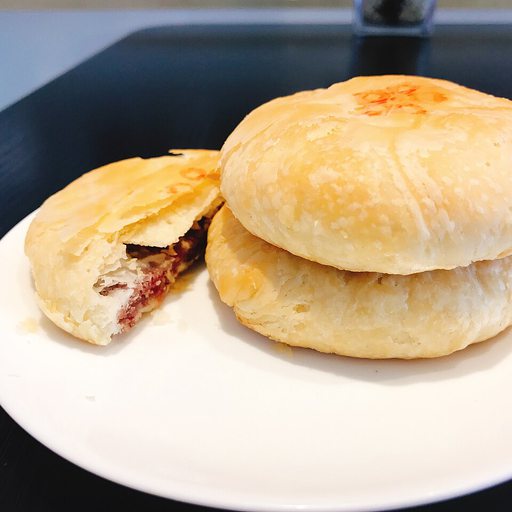 |
Flower Cake鲜花饼 | Yunnan's most popular souvenir — the classic Dian flaky pastry. Filled with highland double-petal rose petals: layers of crisp, feather-light pastry, floral and sweet without cloying. An imperial pastry since the Qing; freshly baked ones keep only ~7 days (airport stock available). | Kunming (Jiahua, Panxianghao) | Best souvenir Rose-filled |
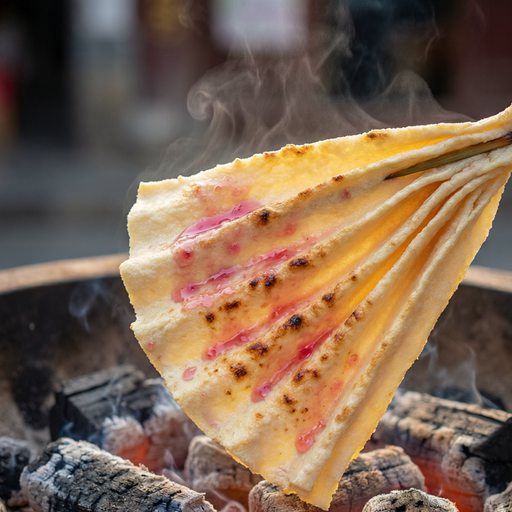 |
Grilled Rushan烤乳扇 | One of the "Eighteen Oddities of Yunnan" — a Bai snack from Dali. Fresh milk is stretched into fan-shaped sheets, grilled over charcoal and brushed with rose jam: milky, fragrant, soft and chewy — the signature street bite of Dali. | Dali Bai Autonomous Prefecture | 18 Oddities Bai specialty |
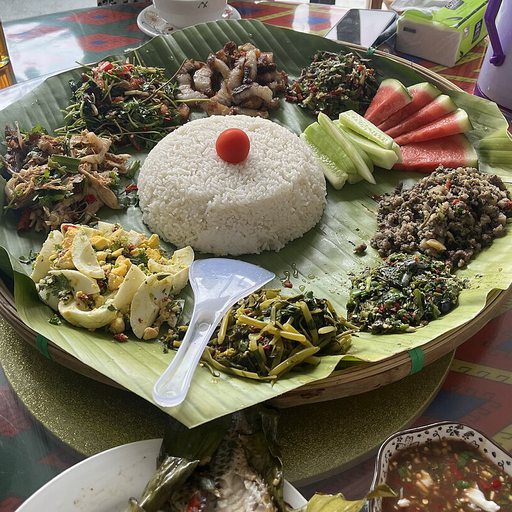 |
Dai Hand-Grabbed Rice傣味手抓饭 | Xishuangbanna's signature feast — a hit for both eyes and palate. Banana leaf as the base; lemongrass roast chicken, grilled fish, pineapple rice, pounded chicken feet, banana-leaf parcels and sticky rice laid out symmetrically. Sour-hot tropical flavors, eaten by hand — hugely photogenic. | Xishuangbanna Dai Autonomous Prefecture | Dai-Thai flavor Instagram-worthy |
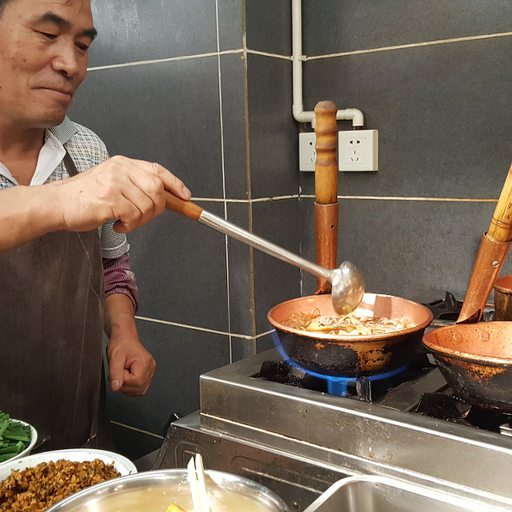 |
Small-Pot Mixian小锅米线 | The soul of Yunnan street food: cooked fresh in a single-serving copper pot. Once the broth boils, minced meat, pickled greens, chives and chili oil go in, then the noodles — silky noodles in a sour-hot, appetizing soup. The Yunnanese breakfast and midnight snack, about ¥10 a bowl. | Kunming & province-wide | Street-food soul Budget favorite |
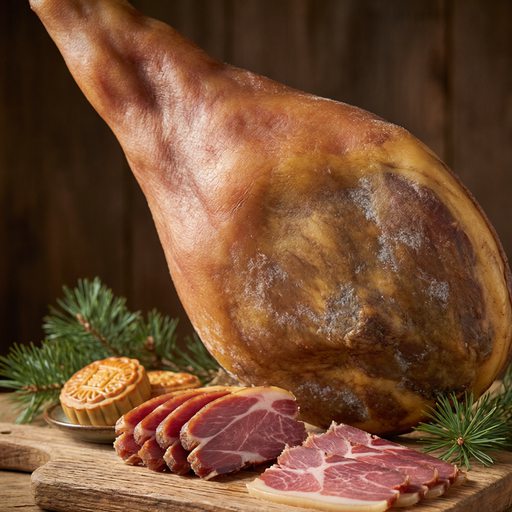 |
Xuanwei Ham宣威火腿 | One of China's three great hams and the core ingredient of Yunnan-ham mooncakes. Black-gold pig hind legs are salted, air-dried and fermented — fine-textured, salty-sweet; sliced raw, stir-fried, stewed, or the soul of "ham-and-papaya chicken". | Xuanwei, Qujing | Top-3 Chinese ham Mooncake hero |
🍽️ Useful phrases for ordering
Year-Round Temperature & Rainfall
Avg. highRainMean
Temperature & rainfall: ERA5 reanalysis 1995–2024 monthly means for a representative station; actual feel varies by city, altitude and local terrain. Dot colors mark monthly suitability (updated 2026-08)
Culture & Local Life
Yunnan is China's diversity ceiling: 25 native ethnic minorities, with Tibetan Buddhism, Theravada, Islam and animist faiths coexisting — from Banna's Theravada temples to Shangri-La's gilded Tibetan roofs, the Hengduan Range compresses Asia's religious geography into a single province. "South of the Clouds" is not rhetoric; it's density.
The Tea-Horse Road and the Yunnan-Vietnam railway are Yunnan's two historic arteries: Pu'er tea went to Tibet for horses along one, and a French meter-gauge train still runs at Jianshui today. Yunnan remains a "province on the road" — Dali's digital nomads, Shaxi's backpackers, Banna's wellness seekers each find their own Yunnan.
"Yunnan time" is real: Kunming folk stroll Green Lake to watch the gulls, Dali folk ride e-bikes out to "the sea", Lijiang folk sunbathe in courtyards to Naxi ancient music. The right way to travel is to slow your schedule down half a gear — the scenery deserves it, and the slow life deserves it even more.
Being a good guest
- Tibetan monasteries: circumambulate clockwise, no photos inside halls, never blow out butter lamps
- Dai temples: shoes off before entering, keep your head clear of doorframes, don't touch monks
- At the Water Festival, being splashed is a blessing — waterproof your phone and camera
- In mushroom season, never pick or eat mushrooms you don't recognize (the hallucinated "little people" are real)
Special Notes & Precautions
Clothing, Stays, Transport & Souvenirs
The four last checks before departure: what to wear, where to stay, how to get around, what to bring home.
What to wear
- Big plateau day-night swings (Kunming: 10°C mornings, 22°C noon) — dress in layers
- UV is extreme: SPF50+ sunscreen, sunglasses, hat (+10–12% UV per 1,000 m of altitude)
- Rainy season: light rain shell + grippy shoes (slick flagstone)
- Shangri-La/Meili: down jacket + fleece — summer dawns dip below 10°C
Where to stay
- Dali: Caicun/Longkan lake-view guesthouses (Erhai sunrise); old town for buzz
- Lijiang: Shuhe (quiet) over Dayan (loud)
- Shangri-La: Tibetan guesthouses in Dukezong (oxygen rooms on request)
- Yuanyang terraces: guesthouses by Duoyishu viewpoint — 5 minutes to sunrise
Getting around
- HSR: Kunming–Dali 2 h, –Lijiang 3 h; Banna 3.5 h
- Shangri-La: 3 h bus/train from Lijiang, or fly direct from Kunming
- Erhai loop: rent an e-bike (¥60–100/day) for maximum freedom
- Terrace villages: chartered cars are standard; Jianshui–Yuanyang–Mengzi chain nicely
What to buy
- Pu'er tea — Menghai raw & ripe pu'er; taste before buying to dodge "story tea" (tea is allowed into most countries)
- Flower cakes — fresh-baked keeps only ~7 days; airport stock available
- Tie-dye / Dongba paper — Zhoucheng tie-dye workshops; Dongba-paper notebooks
- Jade / yellow wax stone — only at certified mall stores with certificates; never touch "gambling stones" at tourist shops
- Small-bean coffee — Baoshan/Pu'er terroir, Yunnan's own cup
Along-the-Way Destinations
Change the month —
a different Yunnan awaits.
Back to the interactive map to explore Yunnan — and China — in other seasons.
Revisit Yunnan in its best month →